

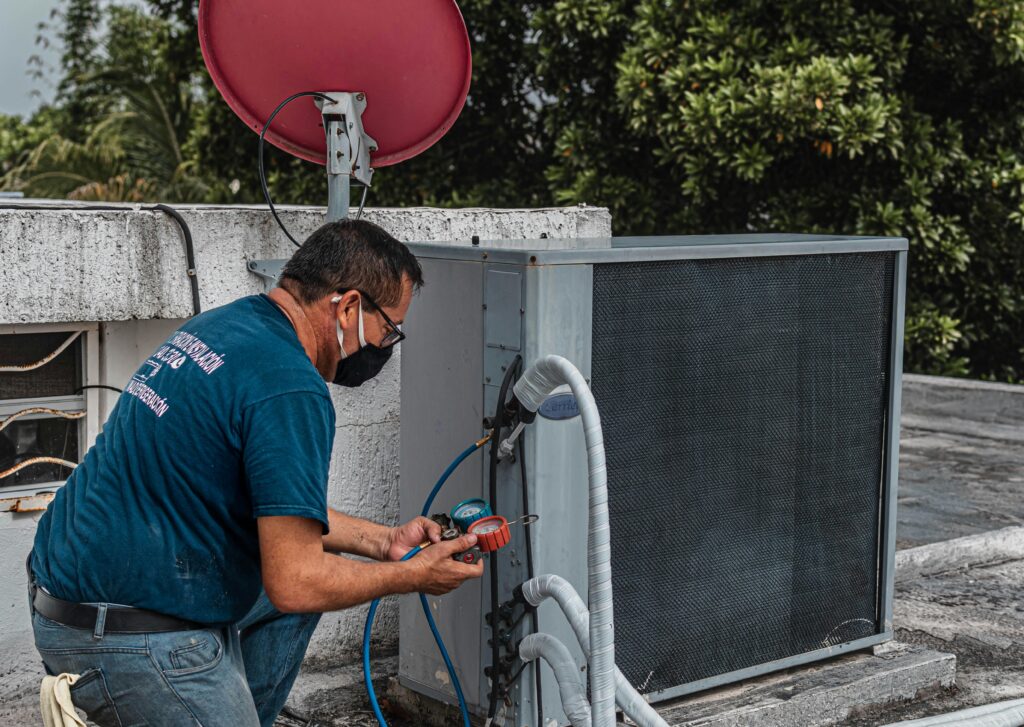
What Every Missed Call Is Actually Costing Your HVAC Business
It is a Tuesday in July. Your tech is finishing up a compressor swap. Your dispatcher is on the phone with a parts supplier. Your cell rings, you cannot get to it, and the caller hears voicemail.
That caller had a dead AC unit in a Florida house. The job was worth $3,200.
They did not leave a message. They called the next HVAC company in Google’s results. That company answered. That company booked the job.
Understanding the missed call cost for an HVAC business is not complicated math. But most owners have never sat down and done it. This post does it for you.
The Real Dollar Amount Behind Every Missed HVAC Call
The average HVAC job ticket in the United States sits between $300 and $800 for a service call and between $3,000 and $12,000 for a full system replacement. Emergency calls skew higher because urgency removes price sensitivity. A homeowner with no AC in July is not shopping around. They are calling until someone picks up.
Here is a basic framework for calculating your missed call cost:
Take your average job ticket value. Multiply it by your close rate on inbound calls. That number is your revenue per answered call. Every missed call costs you that amount.
For an HVAC company with a $250 average ticket and a 60% close rate on inbound calls, one missed call costs $150 in lost revenue. Miss five calls a day and that is $750 a day. Over a 90-day summer season, that is $67,500 walking out the door.
Most HVAC contractors miss far more than five calls a day during peak season. Studies on home service call handling show that the average HVAC company misses between 25 and 30 percent of inbound calls. At higher call volumes, that gap widens.
Why After-Hours Missed Calls Cost More Than Daytime Ones
A call missed at 2pm on a Wednesday is a problem. A call missed at 7pm on a Friday is a different category of problem.
After-hours callers represent your highest-value leads for two reasons. First, they are calling because something went wrong. A system down at 7pm is an emergency call, not a tune-up inquiry. Emergency jobs carry a premium. Second, they have fewer options. Most HVAC companies do not answer after 5pm. The company that picks up captures the job almost by default.
Research from the home service industry consistently shows that 62 percent of HVAC service calls happen outside of standard business hours, evenings, and weekends. If your phones go dark at 5pm, you are dark during the majority of your revenue window. What happens to HVAC revenue after the workday ends.
The math here is not subtle. An emergency AC repair call at 8pm on a Friday has an average ticket of $400 to $800, a close rate close to 100 percent (they need someone tonight), and zero price comparison behavior. Missing that call does not just cost you the job. It costs you that job, possibly a maintenance contract, and possibly a system replacement when the unit finally dies.
How Missed Calls Compound During Peak Season
The missed call problem is always present. But peak season is where it becomes a financial crisis in slow motion.
In July, a busy HVAC company might handle 40 to 60 inbound calls a day. Your techs are booked solid. Your dispatcher is triaging. Your office staff is stretched. Every hour of every weekday, calls are slipping through. Some go to voicemail. Some ring out. Some get picked up too late and the caller has already booked with someone else.
A company missing just 20 percent of its summer calls is not having a bad week. It is losing $50,000 to $200,000 in revenue over a 90-day window depending on market size and average ticket. That money does not disappear. It goes to whoever answered.
This is why after-hours and overflow call coverage for HVAC contractors is not a nice-to-have during summer. It is the difference between a good season and a great one.
The Math Most HVAC Owners Have Never Done
Most HVAC business owners know they miss calls. Very few have quantified what that actually means in annual revenue.
Here is a simple exercise. Pull your call data from the last 30 days if your phone system tracks it. If it does not, estimate.
Total inbound calls: [your number] Percentage answered: [your estimate, industry average is 70 to 75 percent] Calls missed: [total minus answered] Average ticket value: [your number] Close rate on inbound: [typically 50 to 70 percent for home service companies]
Multiply missed calls by average ticket by close rate. That is your monthly revenue leak.
Annualize it. The number is usually uncomfortable.
The Perceptionist Revenue Leak Calculator runs this math automatically if you want to see your specific numbers without the spreadsheet.
What Happens the Moment a Caller Reaches Voicemail
This is the part that matters most and gets discussed least.
HVAC callers do not leave voicemails. The data on this is consistent across every home service study done in the last decade. When a caller reaches voicemail, they hang up and call the next company. They do not wait. They do not call back. The number you left on your voicemail greeting does not get saved.
The reason is simple. A homeowner with a broken AC unit or a furnace that stopped working has urgency. That urgency is their primary emotional state. Voicemail is not a solution to urgency. It is a delay. Delay means they move on.
This is not a failure of your marketing. It is not a lead quality problem. It is a call capture problem. Your marketing is bringing in the call. What happens when that call lands is where the revenue is won or lost.
In 25 years of handling calls for HVAC companies across North America, the pattern is the same: the company that answers first books the job. Not the company with the best truck. Not the company with the best reviews. The company that picked up.
Questions Contractors Ask About Missed Call Costs
How much does a missed call cost an HVAC company?
It depends on your average job ticket and close rate, but the math is straightforward. An HVAC company with a $600 average ticket and a 60 percent close rate on inbound calls loses $360 in revenue per missed call. For companies missing 10 to 20 calls per day during peak season, the annual cost typically runs between $100,000 and $500,000 in uncaptured revenue.
What percentage of HVAC calls go unanswered?
Industry data consistently puts the average at 25 to 30 percent of inbound calls going unanswered across home service companies. During peak summer season when crews are fully deployed, that number is often higher. After-hours, when most companies stop answering, the missed call rate can reach 80 to 100 percent of inbound volume.
Do HVAC customers leave voicemails when no one answers?
Rarely. Research across home service industries shows that callers with urgent issues almost never leave voicemails. They hang up and call the next company. The exception is appointment inquiries during business hours, where a small percentage of callers will leave a message. Emergency calls almost never result in voicemails regardless of time of day.
What is the highest-value type of missed HVAC call?
Emergency calls, particularly after-hours AC failures in summer and heating system failures in winter. These callers have maximum urgency, minimal price sensitivity, and a near-100 percent close rate if reached. They also represent the most likely candidates for future maintenance agreements and system replacements. Missing one emergency call can cost far more than the immediate job ticket.
How can an HVAC company stop missing calls during peak season?
The most effective approach is 24/7 live answering coverage that extends your team’s capacity without adding headcount. A professional answering service trained on your call types, scheduling criteria, and dispatch protocols handles overflow and after-hours calls exactly as your team would. The alternative is hiring additional office staff, which typically costs four to five times more than a third-party answering service for equivalent coverage.
Every missed call has a number attached to it. Most HVAC owners just have not sat down and calculated what that number actually is across a full season. Now you can.
If the math is uncomfortable, that is the point. The first step to stopping the revenue leak is seeing exactly how much you are losing.
Find out what your missed calls are actually costing you. Run your numbers at myperceptionist.com/revenue-calculator or call the Perceptionist team directly at 866-652-5968. No pitch. Just your real numbers.
Share the Post:
Related Posts
Get Started
Every Missed Call Is a Job Your Competitor Just Booked
Get your free Revenue Leak Audit and see exactly how much missed calls are costing your business every month — in real dollars. No pitch. Just your numbers.